


Written by Elisa Withers. B.Physio(hons.) MCSP
Around 8 in 10 women experience menopause symptoms, from hot flushes and night sweats to mood changes, fatigue and brain fog. For around 1 in 4, symptoms can be severe, affecting everyday life and wellbeing (1). The good news is that movement can help support us through this transition. Pilates offers a gentle yet effective way to build strength, improve mobility and balance, and feel more connected to your body at every stage of menopause.
Whether menopause occurs naturally or is medically induced, the changes in oestrogen and progesterone can have wide-reaching effects on the body — influencing muscle and bone health, cardiovascular health, metabolism, cognitive function, sleep and emotional wellbeing.
And while every woman’s experience of menopause is different, one thing is clear: movement and strength are powerful tools for supporting the body through this stage of life.
Why strength matters during menopause
Menopause is associated with reductions in muscle mass (2, 3) and bone mineral density (4). The good news is that recent research shows us that strength training consistently improves body composition, strength and bone mineral density.
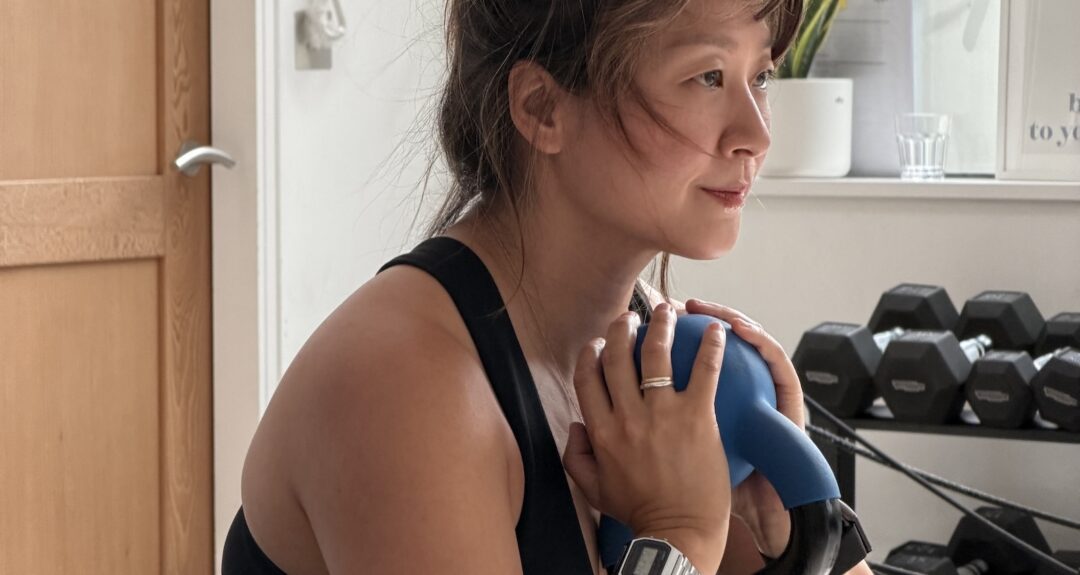
This makes strength training an important part of looking after your body during peri-menopause, menopause and beyond. And strength training doesn’t have to mean spending hours in a traditional gym. Resistance can come from many different sources — including body weight, resistance bands, cables, kettlebells, free weights and, of course, Pilates springs and equipment.
The most effective approach is ultimately one that is appropriate for you, progressive and enjoyable enough that you will keep doing it.
Maintain muscle, strength and metabolism
Muscle plays an important role in how we move, function and maintain our independence as we age. It also contributes to our metabolic health and body composition.
Regular resistance exercise provides the stimulus the body needs to maintain and develop muscle strength. This doesn’t mean you need to lift heavy weights. The right level of resistance depends on your current strength, experience, goals and any injuries or health considerations.
What matters is that the body is appropriately challenged and that the programme progresses with you.
Support strong, healthy bones
Bone density naturally changes with age, and bone loss can accelerate around menopause.
Weight-bearing activity and appropriately loaded resistance exercise provide an important stimulus for maintaining bone strength. This is one of the reasons strength training is an essential part of the conversation around menopause. We’re not simply exercising to look or feel stronger today — we’re investing in the long-term health and resilience of our bodies.
Support mood, sleep and cardio-vascular health
Exercise can also support much more than muscles and bones.
Regular physical activity can help with stress management, mood and sleep, while contributing to long-term cardiovascular and metabolic health.
For some women, having a consistent movement routine can also provide a valuable sense of confidence, control and connection with their bodies at a time when those things can sometimes feel less predictable.
Why Pilates?
At APPI, we believe that combining Pilates with other forms of exercise is a magical combination for optimising physical and emotional wellbeing throughout menopause.
Pilates is a particularly adaptable form of movement that can support women throughout every stage of their menopause journey.
At its best, Pilates isn’t simply about stretching or performing a series of exercises. Evidence supports its effectiveness in progressively challenging strength while also developing mobility, coordination, control and body awareness, balance and preventing falls (5). Pilates has established itself over 100 years as a strong option for improving physical health, particularly when the programme progressively challenges the body and includes standing and functional movements. If maximal strength is the priority, it’s ideal to supplement it with progressive resistance training; if bone health is also a priority, add appropriate weight-bearing exercise (6).
Since resistance doesn’t have to come from traditional weights. Pilates springs, bands, body weight, gravity and props can all create resistance and provide opportunities to progressively load the body. The key is knowing how to use them.
A good Pilates programme should be personalised to the individual, with the intensity, resistance, range of movement and exercise selection adapted according to your current strength and fitness, how you’re feeling, any injuries or health considerations, and — importantly — what you actually want to achieve.
This can be particularly valuable during menopause, when women may experience changes in energy, recovery, sleep, joint comfort, muscle strength and confidence in their bodies. It’s not about doing more. It’s about doing what your body needs. There is no single “menopause exercise programme” that works for every woman.
Some women may be ready to progressively lift heavier weights. Others may need to build a foundation of strength first. Some may be managing an injury, recovering from cancer treatment or navigating a medically induced menopause.
The right programme should meet you where you are and progress with you. That is why we believe assessment, individual goals and expert guidance matter.
Rather than simply being a form of exercise, Pilates can be a practical movement toolkit for menopause — helping women build and maintain strength, move with confidence, support their long-term physical health and continue doing the activities they love.
Specialist Menopause Support at APPI
At APPI, we understand that menopause isn’t a one-size-fits-all experience. Our specially trained Physiotherapists, Exercise in Menopause teachers and Pilates in Menopause instructors provide specialist support for women through peri-menopause, menopause and beyond.
Whether you’re looking to build strength, improve your confidence with exercise, return to activity or simply understand how to exercise effectively through changing stages of life, our approach starts with you.
Pilates in Menopause

Our Mat Pilates in Menopause classes provide a supportive environment to develop strength, mobility, balance and confidence while working with an understanding of the physical changes associated with menopause.
It’s an opportunity to exercise alongside women experiencing similar life stages, while benefiting from specialist instruction and appropriately progressed movement.
Thrive After Cancer

For women who have experienced cancer treatment, menopause can sometimes arrive earlier or more suddenly as a result of treatment. Our Thrive After Cancer classes provide a supportive environment for women navigating life after cancer, including those experiencing the effects of treatment-induced menopause.
The focus is on rebuilding strength, confidence and physical capacity at a pace that is right for you.
Personalised 1-to-1 Exercise
For women looking for a more individual approach, our 1-to-1 sessions begin with a thorough assessment and a discussion of your goals.
You’ll work with either an Exercise in Cancer specialist or our Exercise in Menopause Specialist who can combine their expertise in Pilates, strength and conditioning and exercise rehabilitation with an understanding of the physiological changes that can occur through menopause.
Together, we’ll build a programme around the body you have, the goals you want to achieve and the life you want to live. Call us on 020 8879 7711 or email us to book for your complimentary 15 minute discovery call with our Exercise in Cancer and Menopause specialists Lucy Pattullo and Cristina Malgarotto.
References:
- NHS. Symptoms of menopause and perimenopause. https://www.nhs.uk/conditions/menopause-and-perimenopause/symptoms/
- Walter F, Schalla J, Bloch W, Diel P, Geisler S, Isenmann E. (2026).
“Analysis of the Additive Effects of Nutritional Strategies in Strength Training Interventions on Body Composition, Muscle Strength and Bone Mineral Density in Postmenopausal Women: A Systematic Review.”Journal of the International Society of Sports Nutrition, 12(1), 5. https://pubmed.ncbi.nlm.nih.gov/41535482/ - Hiam D, et al. (2023). “The role of oestrogen in female skeletal muscle aging: A systematic review.” Maturitas, 2023; DOI: 10.1016/j.maturitas. 2023.107844. https://pubmed.ncbi.nlm.nih.gov/37716136/
- Zhao, F, et al. (202 Optimal resistance training parameters for improving bone mineral density in postmenopausal women: a systematic review and meta-analysis. J Orthop Surg Res. 2025 May 27;20(1):523. https://pubmed.ncbi.nlm.nih.gov/40420105/
- Fernández-Rodríguez R, et al. (2021) Pilates improves physical performance and decreases risk of falls in older adults: a systematic review and meta-analysis. Physiotherapy.